An amateur’s take on making sense of the Coronavirus pandemic and a plan for how to get things back to normal (ish)
Disclaimer : Besides being a mediocre software professional, my biggest skillset is blowing raspberries at my 5 month old son. So, if the title of this post didn’t make it clear enough, I am a novice at understanding this pandemic and I may be wrong about some of the things I talk about here. Another thing. I am experiencing the pandemic from the US so my filter and take is biased by the situation in this region of the world.
On New Year’s Eve as the rest of the world was celebrating the beginning of 2020, partying with friends and family, watching fireworks and making resolutions, China reported a cluster of cases of pneumonia in people associated with a wet market in Wuhan. After a few days, these cases were confirmed to be of the novel coronavirus, COVID-19. As this story was developing in China, our news headlines were still talking mostly about “regular” stuff — the US missile strike on the Iranian general Soleimani, Iran’s retaliation misfiring and hitting a passenger airplane killing 176, the bushfires causing devastation in Australia, the UK officially withdrawing from the EU, Kansas city chiefs winning the Superbowl and the South Korean movie Parasite became the first foreign language film ever to win the academy award for best picture. During all this, unbeknownst to us, the coronavirus was secretly spreading across the world by hitchhiking rides on humans driving, sailing and flying thousands of miles away from its origin.
Taking stock
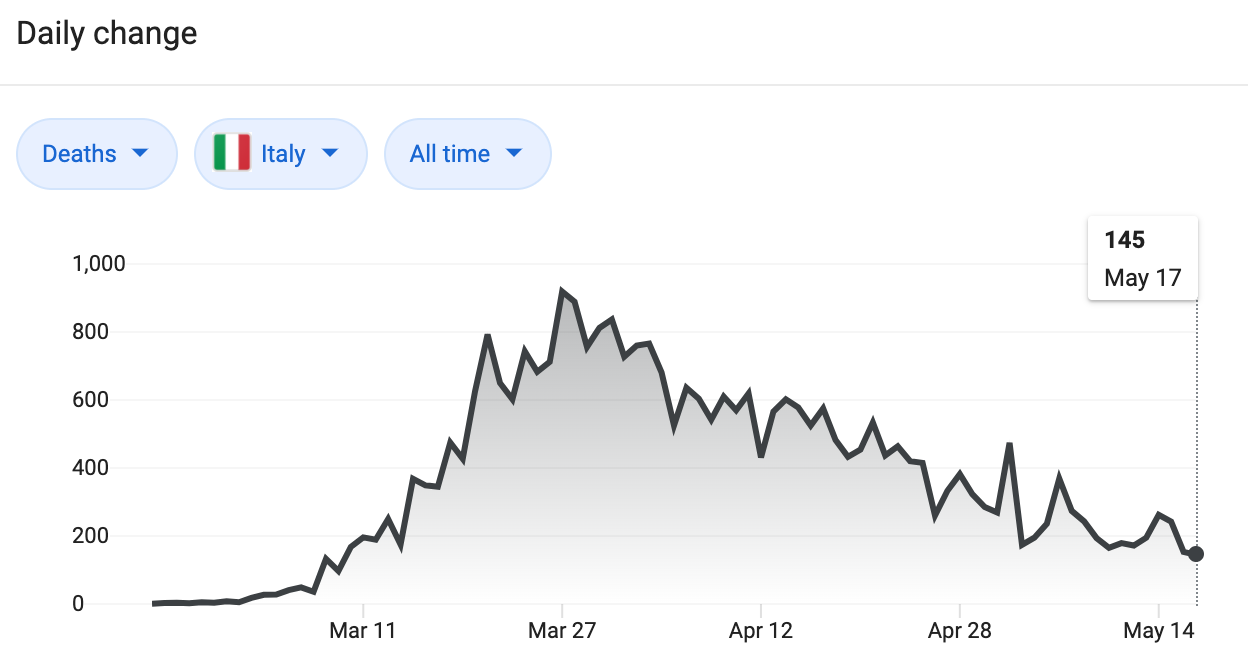
In Snohomish County, approximately 10000 km (6000mi) away from Wuhan, the first case of novel coronavirus was confirmed in the United States on 20th January. This person had recently traveled from Wuhan and was the patient zero in the US. He was 35 and recovered successfully. The seniors at a Life care center in Kirkland, Washington were not so lucky. The first death occurred on 29th Feb in this facility, a few miles from where I live. Within a few days, the death toll in the state had hit 10 and during that time it seemed like a big number. Since these incidents, the total number of confirmed cases in the US as of today (17th May, 2020) is 1.5 million and the death toll has reached 90 thousand. Worldwide almost 5 million cases have been confirmed and the virus has claimed for more than 300 thousand lives in the last three months. And the numbers are growing at an alarming rate. Approximately 200 people are dying every hour.
The impact on the economy has been unprecedented. More than 25 million people lost their jobs just in the US. Before the pandemic started, the unemployment rate in the US was 3.4% in the month of March, the lowest in the last 50 years. The following month, once the pandemic hit, the unemployment rate skyrocketed to 14.7%, the highest ever in the last 50 years. Companies are closing, furloughing, and declaring bankruptcy. All 50 states in the US declared an emergency and the fed pumped in 2.1 Trillion dollar relief package to revive the crippled economy. The stock markets fell 30% within a month bringing back memories of the 2008 financial crisis.
The vaccine
For me, at first it was quite difficult to grasp that humans had no answer to an enemy that was killing more than 3000 people daily. It’s like 9/11 happening every day and we pretty much unable to do anything. The species that had landed men on the moon, sent probes to distant planets, invented technology that assimilated the world’s combined knowledge on a handheld device, and found cures to hundreds of diseases was helpless in front of this virus.
As per experts, optimistically, a vaccine is 12–18 months away. Some say it can take as long as 5 years or more. And some experts say it is possible that we may never have a vaccine. We don’t have any vaccine for the other coronaviruses such as SARS and MERS. Considering the most optimistic timeframe for development of a vaccine, we are looking at a worldwide death toll of 2–3 million by April-2021.
Lockdowns are effective. Lockdowns are disastrous.
Wherever lockdowns have been successfully implemented, they have bent the curve. That helped the local governments cope up with the surge in demand for Intensive Care Units and ventilators. Places like Italy and New York initially couldn’t bend the curve and were overwhelmed by the number of people being hospitalized. Places that could effectively implement the lockdowns and stay-at-home orders were able to keep their death toll manageable and prevented the spread of the virus.
Both Italy and New York were able to handle the crisis once they started enforcing the lockdowns.
Lockdowns while effective in reducing the death toll, are crippling to the economy. Pretty much every industry is adversely impacted while some of them are in dire straits. With the borders closed and stay-at-home orders, airlines are experiencing an 80% drop in bookings. Hotels are in a similar state. Restaurants are trying to survive on takeout orders. Ride-hailing and taxi services saw a steep decline in demand as well. All non-essential retail had to close down. The real estate market is suffering because no one wants to buy in these uncertain times. All this slowness and lack of demand in turn drove the price of oil down so much that it briefly became negative when storing a barrel of crude was more expensive than the value of the good in it.
The conundrum
The only way to make sure we don’t cause any more deaths by the virus is to force everyone in lockdowns until we find a vaccine. Which is at least a year away. And the only way to revive the economy is by ending the lockdowns and getting everyone back out working and spending. It’s a deadlock. Do we value lives more or do we value the economy more? What do we choose? We need a solution that prevents any more deaths and at the same time recovers the economy.
The perfect solution
Unfortunately, it does not exist. Black swan events like the coronavirus occur once in a century. If we wish to find a solution which promises no deaths and at the same time recovers the economy then we are living in a fool’s world. If you are advocating for a total lockdown until we have a virus you need to explain the father of two who lost his job that how is he going to put food on the table for his family. You owe an explanation to the lady who is in excruciating back pain because she can’t get her surgery because it’s non-essential and the hospitals can’t admit her even though they have capacity.
And on the other side, if you are one of them who wants everything to open up for everyone right now then you are not really thinking this through and being inconsiderate. Without a solid reopening strategy, the virus can run havoc on the population.
So, like most crisis situations the solution is more nuanced than a simple binary. We first need to accept that whatever the solution, it will be result in deaths and there will be an impact on the economy. The world on the other side of the solution will be a different one. The question is how do we come up with a solution that can effectively manage and minimize the risk of lives and the impact to the economy. But before we find a solution, we should look at the casualty and case numbers that are available more closely.
Making sense of the numbers
The metric that the media widely reports is the number of deaths and the number of confirmed cases. These numbers are scary and sobering. And rightly so. These frightening numbers definitely made sure most of us took the stay-at-home orders seriously and bent the curve. But if you wish to find a solution to the conundrum that we discussed earlier we have to dig deeper.
We see the confirmed cases everywhere but what percentage of the population being tested is resulting in positive cases? As per data published by the san Diego county 4–6% of people tested result in positive cases. And this number continues to go down.
How many are getting hospitalized?
1 out of 5 people who are testing positive for COVID-19 are requiring some type of hospitalization. And 1 out of 20 people who are testing positive are needing ICUs. The remaining are recovering by themselves by quarantining and staying at home.
What about the deaths?
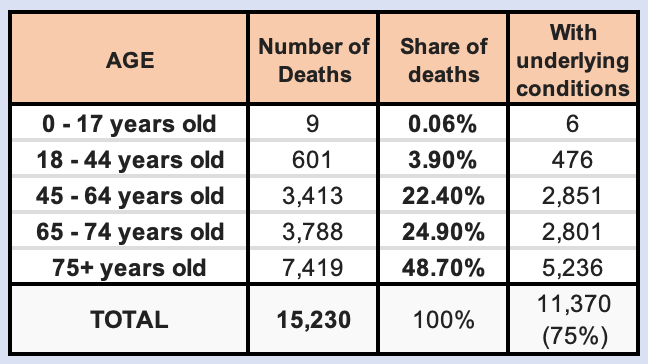
Approximately 6% of the total confirmed cases are resulting in deaths. If we peel away, we find out that the death rates are critically high for people above the age of 75. This age group shares almost half of all the deaths. And the age group of 45–75 share more than 47% of the total deaths. So 96% of the total deaths are in the age group of 45 and above. Less than 4% of the total deaths are occurring in people below 45 years of age. So if you are below 45 years of age, the death rate of 6% for you is not correct. It’s actually 0.3%. 20 times lesser. This number further improves if you are healthy without any underlying conditions.
This table below shows the breakdown of deaths in the New York City by age groups and underlying heath condition (Data as of 13-May-2020)
While this is a positive data point for the younger population, it’s a caution for people above 45 years of age. They are at a much higher risk of fatality and hospitalization. This is a good data point to be aware of and it should inform our decisions on how to strategize restarting the economy and saving lives. More on this later.
Now that we know a little more about the numbers let’s contemplate the multi trillion dollar question. Should we end the lockdown? If yes how do we do it and manage the risk of the resurgence of the virus?
Conditional reopening
Before we end the lockdowns, we need to setup some criteria which would dictate if the lockdowns can be ended or eased. Some governments are successfully using these to reopen their communities. Without these criteria being met, ending the lockdown would be disastrous and all the positive gains made by the stay-at-home orders would be lost. The most important conditions that I think should be met are listed below
1.Testing capacity
Testing needs to become highly available, immediate, and inexpensive so that we can identify, isolate, and treat the victims quickly. Imagine coronavirus testing equipment available similar to pregnancy kits which anyone can purchase from a nearby drug store and administer themselves and get the results immediately. That will soon be the norm. Finding a vaccine in the next couple of months is impossible but developing millions of test kits is definitely possible. As a tactical quick step, drive by or walk in testing facility should be readily available for anyone who feels a little sick or is anxious to know if they are infected.
2. Priority to the vulnerable
As we discussed earlier, the age group of 75 and above is the most vulnerable. They should be prioritized for financial support, medical support and testing. The age group of 45–75 is the next most vulnerable and they should be the next in priority for all support.
3. Contact Tracing
Contact tracing is the method to find the transmission network of a virus that may have occurred from an infected patient. With smartphones in everyone’s pocket and cutting edge location technology available already, we should build a system that can tell us the blast radius of an infected patient in real-time. Once implemented, we should be able to check the risk level of a particular venue before heading out. Imagine you plan to visit a restaurant; you should be able to open an app on your smartphone and check if anyone with confirmed coronavirus visited the restaurant in the past 24 hours. Or is there anyone with the virus there currently. Health officials and the government will be able to use this technology to track the spread or prevent resurgence of the virus. South Korea is already doing this quite effectively and they are a model on how to deal with the crisis.
4. PPEs and safe distancing guidelines
Masks should become mandatory in public settings. High-quality N95 masks should be made available for everyone. New regulations need to be implemented for safe distancing based on which restaurants and offices can be reopened. Authorities need to define the thresholds of occupancy of different establishments before they can reopen. Many stores in the US are already doing these. For example, Costco has made wearing face masks mandatory for its customers and it’s only allowing a limited number of people in its store at a time.
5. Remote work
Whenever possible, remote work needs to be allowed. In jobs that don’t need someone to be physically present in an office, it should be allowed to be done remotely. Most of corporate America has supported this during the lockdowns but this should be extended even beyond the lockdowns. Big techs such as Google, Facebook and Amazon have already extended their remote work facility for the next several months. Twitter recently announced a forever work from home option for its employees. Smaller companies need to follow these as well and governments need to encourage the employers to provide this facility.
6. Money in people’s hand
With a 15% unemployment rate and expected to soon be 25%, nothing can help people more than real money in their hands. A jobless single parent can get some help in paying the next month’s rent or a restaurant worker can pay a daycare so that they can go find another job. Money in hand will help people and the economy directly. Sending people checks can make a real difference. This is already happening in the US and more governments should do this.
7. Phased end of lockdowns
We should not just end the lockdown one fine day and expect things would get back to normal. It needs to be a phased approach. As we meet the criteria above we need to ease the lock down on the least vulnerable based on a number of metrics such as daily new cases, daily deaths, hospital occupancy, testing capacity, PPE availability.
Conclusion
Like most of you trapped inside the home due to the lockdowns, I have consumed an inordinate amount of Coronavirus news, opinions and editorials in the last 3 months. It has been a mixed bag of feelings starting from being surprised, scared, helpless, stressed, anxious and overwhelmed. Putting everything down here has been oddly therapeutic. It helped me process everything and put things in a better perspective. If you read this, I hope it did the same for you.
Looking 1 year ahead
Imagining the situation same time next year. Maybe we will have a vaccine and everything will be back to normal. But at the risk of sounding pessimistic, there is a real possibility that we may not have a vaccine. But, even if we don’t have a vaccine, I hope we would have done everything else that was possible and, in our control, such as scaling our testing ability, implementing contact tracing, and starting the economy back in a phased approach.
Looking 5 years ahead
It’s 2025. We have a vaccine for COVID-19 that we are required to take every year like the seasonal flu shot. We have a practically unlimited amount of testing ability and contract tracing can be done in real-time. Borders are equipped to screen for any infected persons and we are going about our daily lives as normally as possible. Governments and hospitals have ramped up their surge capacities to deal with any future pandemics. Immunology advances have reduced the time taken to develop a new vaccine from 18 months to 6 months.
Looking 10 years ahead
It’s 2030. We had COVID-29 last year, a new virus that originated somewhere in another wet market. But thanks to advances in testing abilities it was detected within a couple of days and using the cutting edge contact tracing technology, the virus was contained within a 100km radius. Advanced Immunology systems developed a vaccine within 2 weeks that was safe for mass consumption. There were zero casualties.
And I am telling stories of our struggles during the COVID-19 pandemic to my 10 year old son and he is laughing at the fact that we were living in such archaic times in 2020.
On the morning of August 1, 2012, Knight Capital - then one of the biggest market maker on Wall Street - deployed new code to its high-speed trading system—but one of eight production servers never got the update. That lone machine started running an old, dormant module called “Power Peg,” flooding the market with errant trades. In just 45 minutes, Knight amassed nearly $7 billion in accidental positions and lost $460 million. It was one of the most expensive software failures in Wall Street history—driven by a rushed deployment, missing checks, legacy code left behind, and no clear plan to roll back. This is the story of how a routine release turned into a company-ending event—and what leaders today can learn from it. Founded in 1995, the Knight Capital Group was the largest market maker in US equities. Knight’s electronic trading group covered more than 19000 securities and it’s high frequency trading algorithms processed a daily trading volume of $20 billions which was 15% of ...
We live in the zeitgeist of artificial intelligence — where software can be built faster and cheaper than ever before. AI has leveled the playing field, turning anyone with an idea into a potential creator. But in a world where speed and cost are no longer the constraints, what will truly separate the winners from the rest? The classic development trade off — good, fast, or cheap — has long forced teams to pick two at the expense of the third. AI is changing this by enabling development that is both fast and cheap. The pressing question becomes: can AI help us achieve software that is also good ? From idea to prototype, AI empowers teams to deliver solutions quickly, affordably, and with surprisingly high quality. Moving from prototype to Minimum Viable Product (MVP), it’s still possible to maintain the trifecta of Good, Fast and Cheap. However, when aiming for production-ready applications, the stakes rise. Reliability, security, maintainability, and scalability beco...
Chick-Fil-A or Popeyes or Shake Shack. The jury is still out on who serves the best chicken sandwich but I am declaring a winner on who has the best mobile app experience. And the champion is Chick-Fil-A. Our phones are inundated with numerous apps. But you hardly come across one that enhances your experience with the product and impresses you so much that you stop for a minute and appreciate the excellent work done the team who built it. Chick-Fil-A One, the fast food restaurant chain's mobile ordering app did it for me. Chick-Fil-A is an intriguing company. Started 75 years ago it is still a family owned business, one of the largest restaurant chains in the US, operates more than 2600 locations, generating revenue of more than $10 billion. They have the highest sale per restaurant unit easily beating giants such as McDonalds, Taco Bell and Subway. Oh and they do this while being mandatorily closed on Sundays. Quite a remarkable feat! How do they do it? The answer...
“When a metric becomes a target, it ceases to be a good metric.” - economist Charles Goodhart I feel that every discussion about metrics should mandatorily start with the above word of caution from Goodhart’s law. Metrics should inform decisions, not drive behavior in isolation. Without context, they can easily be gamed or give a false sense of confidence. Alright! With that disclaimer out of the way, lets talk about Quality Metrics for production readiness. What you’ll find here comes from the trenches — lessons from things that worked, things that didn’t, ideas that sounded smart but fell apart at scale, and blind spots I didn’t see until they hit production. I’ve owned software quality across industries like e-commerce, fintech, streaming, and SaaS — in startups, scaleups, and big tech. Your context may vary, but these insights should hit home for most teams shipping software. Why Should We Even Measure Quality? I believe there are three reasons to measure software quali...
I have a sweet tooth. Whenever I am at a grocery store, I love to surf the candy aisle. Specifically the shelves with the chocolates. And the selection of chocolates is vast. There are literally hundreds of options. So many brands, flavors, sizes to choose from. But some chocolates would stand out in the crowd. And what makes some stand out amongst the others is the packaging. Out of the hundreds of selections on offer, I pick up only a few to review and amongst them only one gets bought. (Side note: The Endangered Species Chocolate company has a great product packaging and story. Try it out if you haven’t.) If not with chocolates, you would have experienced a similar situation while purchasing something else. Maybe a book, a bottle of wine or a bag of chips. And every time you are looking to discover something new, the first thing that draws you to the product is its packaging. Now, why am I talking about product packaging in a post about building great resumes? Well, if you rea...
Before we talk more about CAPTCHA, we need to talk quickly about Turing Tests. Long before Artifical Intelligence was the cool thing to work on, Alan Turing the great british mathematician deviced a test to tell a computer apart from a human. As part of the Turing Test, a human interogator asks the same question to another human and a computer. The interogator does not know which one is the human and which is the computer. Based on the responses from the human vs the computer, the interogator has to guess which response is from the human. If the computer is able to fool the interogator into beleiving that it is the human for more than 50% of the responses then it is considered that the machine has acheived AI. So, considering that we are in a world where we have not acheived AI which can match human intelligence, a machine or computer would fail at a task that humans can do easily. CAPTCHA uses this philosophy at it's core. CAPTCHA is a software test that validates if the subject...